By Kristen Kellems

This summer, I visited some of The Hague’s best-known legal institutions. Seeing them up close was a useful reminder that “international court” is not one job description. These institutions were created at different moments, hear different kinds of cases, and get their authority in different ways.
For law students and researchers, those differences matter. They tell you who can bring a case, which founding document to consult, and whether the issue is state responsibility, arbitration, or individual criminal liability.
The Permanent Court of Arbitration:
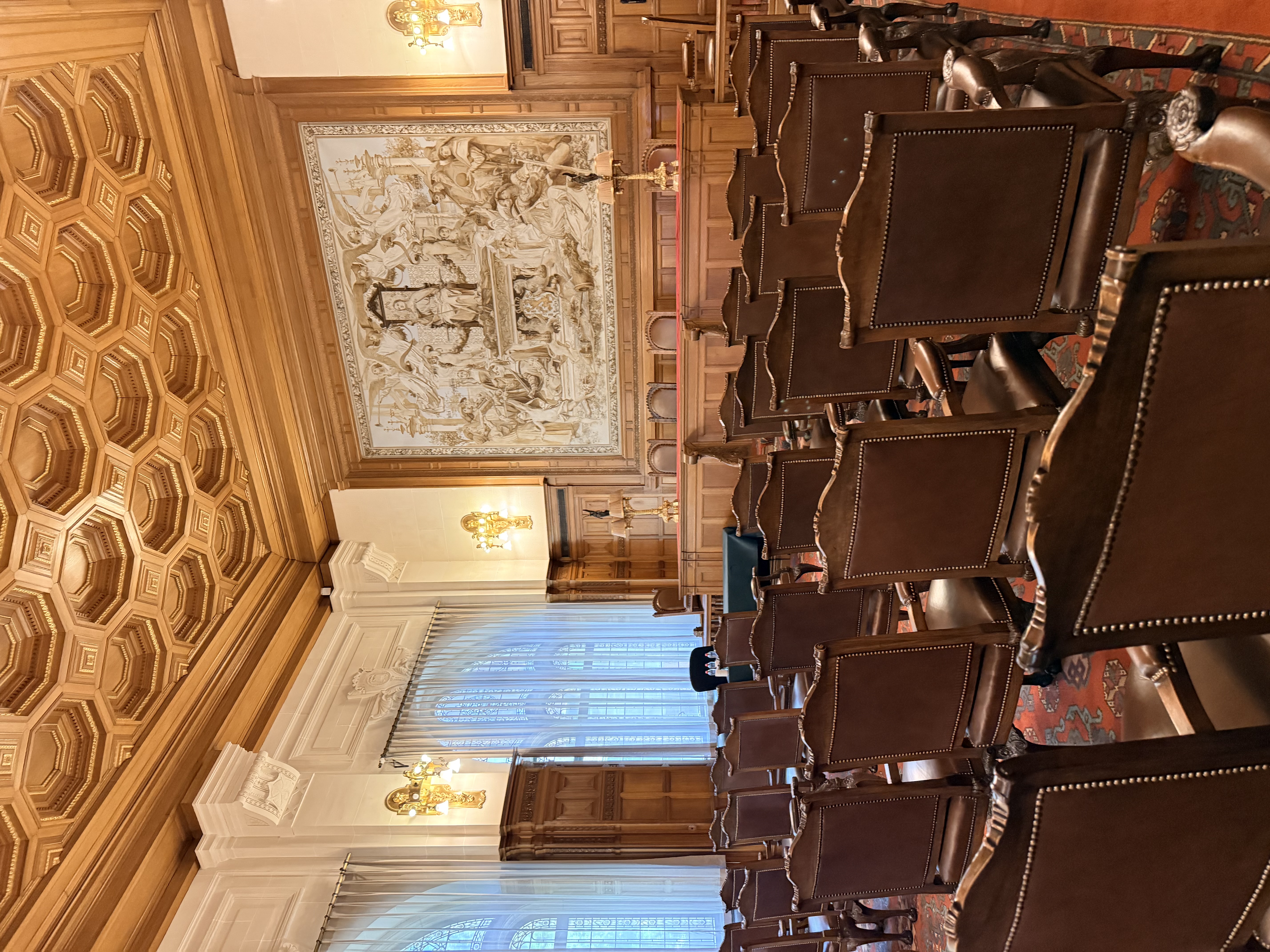
The Permanent Court of Arbitration (PCA) is the oldest of the three. It was established at the First Hague Peace Conference in 1899 to help states resolve disputes without resorting to force.
Despite its name, the PCA is not a standing court with one permanent group of judges. It provides the institutional framework—rules, administrative support, and potential arbitrators—for tribunals created to hear particular disputes.
The PCA administers arbitration and other proceedings involving states, international organizations, state entities, and sometimes private parties. Investor-state arbitration is one familiar example. In every case, jurisdiction depends on consent, usually found in a treaty, contract, or arbitration agreement.
Research tip: start with the agreement conferring jurisdiction and the procedural rules selected by the parties. Also remember that some arbitral proceedings and documents are confidential.
The International Court of Justice
The International Court of Justice (ICJ) is also housed in the Peace Palace. Created by the United Nations Charter in 1945 and active since 1946, it is the principal judicial organ of the United Nations.
The ICJ decides legal disputes between states. Individuals, corporations, and nongovernmental organizations cannot bring contentious cases there. The Court also gives advisory opinions when authorized United Nations organs or specialized agencies submit legal questions.
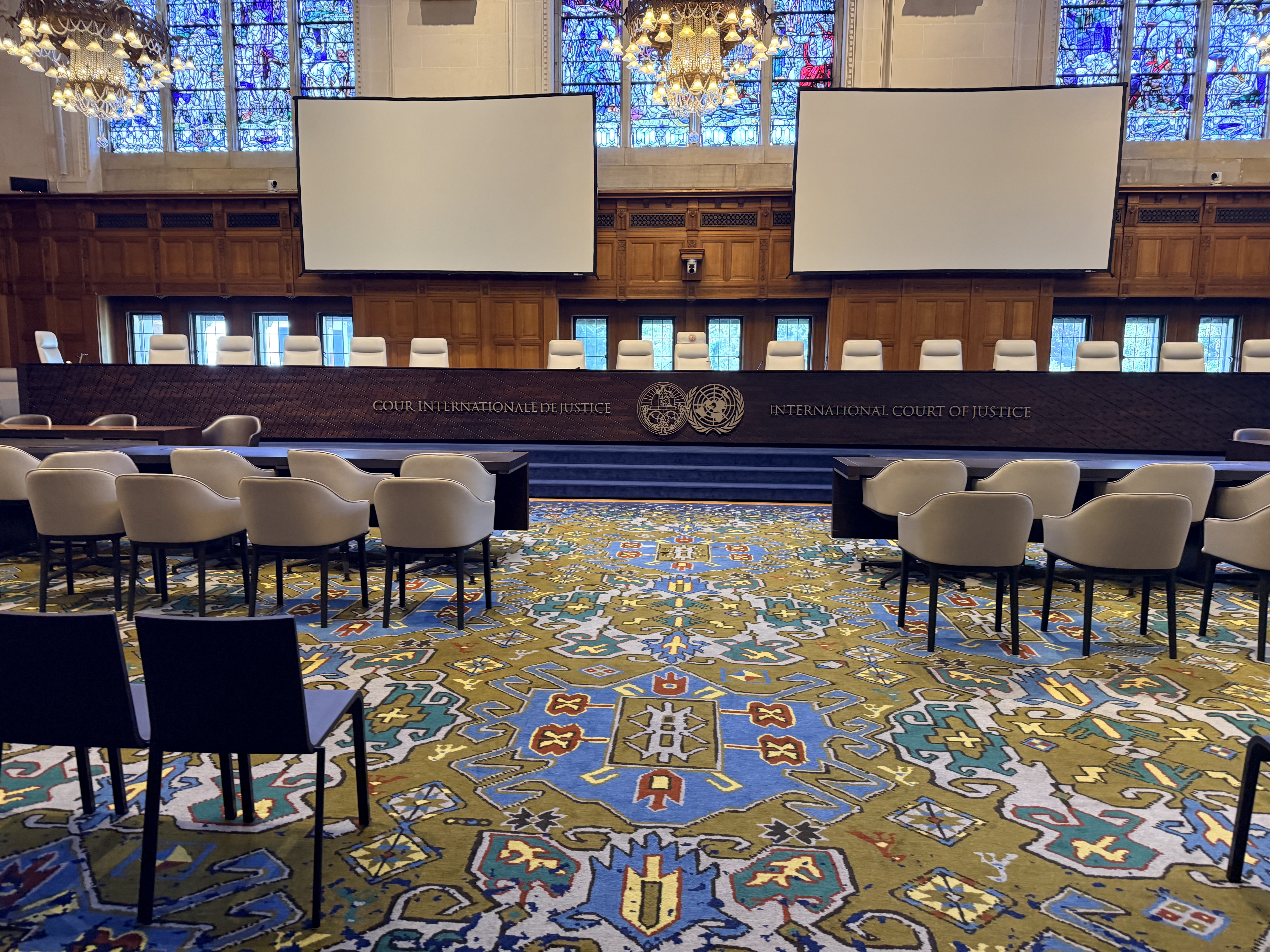
The key jurisdictional concept is consent. A state may consent through a special agreement, a jurisdictional clause in a treaty, a declaration accepting compulsory jurisdiction under Article 36(2) of the ICJ Statute, or consent given after a case is filed.
This distinction is especially important in atrocity-crimes research. An ICJ case under the Genocide Convention concerns state responsibility. It does not decide whether a particular person is criminally guilty.
The International Criminal Court
The International Criminal Court (ICC) is the newest of the three and occupies its own complex elsewhere in The Hague. Its founding treaty, the Rome Statute, was adopted in 1998 and entered into force in 2002. The ICC is independent of the United Nations, although the two cooperate.
Unlike the ICJ, the ICC prosecutes individuals. Its subject-matter jurisdiction covers genocide, crimes against humanity, war crimes, and the crime of aggression. Its authority is also limited by time, territory, nationality, and the route by which a situation reaches the Court. A Security Council referral can provide one such route.

The ICC is a court of last resort. Under the principle of complementarity, national courts retain primary responsibility for prosecuting Rome Statute crimes. The ICC generally steps in only when a state with jurisdiction is unwilling or unable genuinely to proceed. It also has no police force, so arrests and other enforcement measures depend on cooperation from states.
The quickest way to tell them apart
The PCA provides a framework for consent-based arbitration. The ICJ resolves disputes between states. The ICC prosecutes individuals for defined international crimes.
When researching an international case, begin with three questions: Who are the parties? What instrument grants jurisdiction? What kind of responsibility or remedy is at issue? Answer those, and you are usually on your way to the right court—and the right primary sources.